Last updated
A funded trading account is a live capital account provided by prop firms where you trade their money instead of your own. The firm supplies the capital—typically ranging from $5,000 to $800,000—while you keep a percentage of the profits you generate.
Here's how it works: You pay an evaluation fee, pass their trading challenge, and then receive access to real capital. No personal savings at risk. No sleepless nights watching your own money disappear on bad trades.
The appeal is obvious. Instead of grinding with a $500 personal account, you could be trading with $100,000 in firm capital within weeks. Your profit potential scales dramatically when you're not limited by your own bank balance.

Most funded accounts operate on profit-sharing models. Based on typical industry standards, you keep 70-90% of profits while the firm takes the remainder. It's a partnership—they provide the capital and infrastructure, you provide the trading skill.
Sign up and choose your ideal pro sign up to FundedX now p account.
Getting a Funded Trading account follows a predictable sequence. Master these steps and you'll have access to serious capital faster than most traders realize.
Start by researching legitimate prop firms. Look for transparent rules, realistic profit targets, and solid payout histories. Avoid firms with impossible requirements or sketchy terms.
Key factors to evaluate:
Most firms require you to purchase an evaluation challenge. Based on typical industry pricing, prices range from $49 for smaller accounts to $989 for larger ones. This isn't a scam—it's how firms filter serious traders from gamblers.
The evaluation demonstrates your ability to manage risk while generating consistent profits. Think of it as your trading resume in action.
challenge requirements vary by firm, but common benchmarks include:
The key is treating the evaluation like a real funded account. Trade your proven strategy. Don't get fancy or try new approaches during evaluation.
Industry estimates suggest that only 15-20% of traders pass their first evaluation attempt. The difference? Successful candidates stick to their tested strategies instead of trying to impress evaluators.
Once you pass evaluation, most firms provide funded accounts within 24-48 hours. You'll receive login credentials for a live trading platform with real capital allocated to your account.
This transition from evaluation to funded trading requires mental adjustment. The pressure feels different when profits directly impact your income potential.
Every Prop Firm has specific rules designed to protect their capital. Understanding these requirements before starting prevents costly mistakes that could terminate your funded account.
Most evaluation challenges require achieving specific profit percentages. Common structures include:
| Phase | Typical Target | Time Limit |
|---|---|---|
| Phase 1 | 8-10% | Unlimited or 30+ days |
| Phase 2 | 4-5% | Unlimited or 60+ days |
| Funded Account | No specific target | Ongoing |
The targets are achievable for competent traders. They're designed to identify consistent performers, not lottery winners hitting massive single trades.
Drawdown limits protect firm capital from excessive losses. Two common types exist:
Daily drawdown limits how much you can lose in a single trading day. Typical limits range from 3-5% of account balance.
Maximum drawdown tracks your worst performance from the account's highest point. Industry standards typically cap this at 6-10% of starting capital.
Violating either drawdown rule typically results in immediate account termination. There's no appeal process—the rules exist for good reason.
Common restrictions include:
These rules aren't arbitrary. They reflect risk management principles that protect both trader and firm capital over the long term.

Passing Prop Firm evaluations requires a different mindset than typical retail trading. You're not trying to get rich quick—you're demonstrating professional trading competence under specific constraints.
Successful evaluation candidates prioritize capital preservation over profit maximization. Based on typical risk management practices, risk only 1-2% per trade, even when rules allow larger position sizes.
Calculate your position sizes before entering any trade. Use stop losses on every position. Never move stops against your position—this single mistake eliminates more traders than poor market analysis.
The evaluation isn't about proving you can make money fast. It's about proving you won't lose money fast.
Don't experiment during evaluations. Use the same approach that made you profitable in demo or small live accounts.
If your strategy typically achieves 3-5% monthly returns, don't suddenly expect 10% monthly performance during evaluation. Consistency beats heroics every time.
Document your strategy beforehand. Write down your entry criteria, exit rules, and risk parameters. Refer to this document daily to avoid emotional deviations.
Track your trading statistics beyond simple profit/loss:
Good process naturally produces good results. Bad process occasionally produces good results, but not consistently enough to pass evaluations.
Industry estimates suggest that traders who document their performance before evaluation attempts have 40% higher pass rates than those who don't track their statistics.
Most evaluation failures follow predictable patterns. Avoid these common mistakes and you'll dramatically improve your chances of getting funded.
Many traders increase their trading frequency during evaluations, thinking more trades equal faster profits. This approach backfires spectacularly.
Overtrading leads to poor trade selection, emotional decision-making, and inevitable rule violations. If your typical strategy involves 2-3 trades per week, don't suddenly start taking 2-3 trades per day.
Quality beats quantity in evaluation environments. Better to achieve profit targets with 10 well-executed trades than attempt the same targets with 50 mediocre positions.
Based on typical evaluation outcomes, drawdown violations account for roughly 60% of evaluation failures. Traders often understand the rules intellectually but fail to implement proper position sizing practically.
Calculate your maximum position size before every trade. If daily drawdown is 4% and you're willing to risk 2% per trade, your stop loss can't exceed 2% distance from entry. Simple math prevents expensive mistakes.
When initial trades go poorly, many traders abandon their proven approach for something new. This strategy switching guarantees failure.
Every trading approach experiences losing streaks. Your evaluation period might coincide with a temporary rough patch. Stick with your tested strategy and let probability work in your favor.
Not all prop firms operate equally. Some offer better terms, more realistic requirements, and stronger payout histories. Your choice significantly impacts your success probability.
When comparing firms, examine these critical factors:
| Factor | What to Look For | Red Flags |
|---|---|---|
| Profit Targets | 8-10% Phase 1, 4-5% Phase 2 | 15%+ targets, unrealistic timeframes |
| Drawdown Limits | 4-6% maximum, 3-5% daily | 2% or lower limits |
| Payout Frequency | Bi-weekly or monthly | Quarterly or longer |
| Profit Share | 70-90% to trader | 50% or lower splits |
Research each firm's reputation through trading communities and independent reviews. Look for consistent payout reports from actual funded traders.
Most firms offer multiple program structures:
Two-Phase challenges: Traditional evaluation with two profit targets before funding. Offers more time to demonstrate consistency.
One-Phase challenges: Single evaluation phase with higher profit targets. Faster path to funding but more demanding requirements.
instant funding: Immediate access to capital with ongoing performance requirements. Higher upfront costs but no evaluation delay.
Consider your trading style and risk tolerance when selecting program types. Patient traders often prefer two-phase challenges, while experienced traders might choose instant funding options.
When evaluating firms, becomes essential reading. Understanding the specific requirements helps you choose programs aligned with your trading approach.
FundedX stands out in the crowded Prop Trading space through competitive terms and trader-friendly policies. Their program structure addresses common trader pain points while maintaining realistic performance standards.
FundedX offers multiple pathways to funding:
The variety allows traders to match programs with their capital needs and timeline preferences. beginners can start with smaller Turbo Challenges while experienced traders access larger instant funding options.
FundedX provides industry-leading profit sharing with 90% going to traders. Their bi-weekly payout schedule ensures faster access to earned profits compared to firms with monthly or quarterly payment cycles.
The 115% refund policy on successful challenges effectively makes the evaluation free—you receive more back than your initial payment. This structure aligns firm interests with trader success.
Receiving funded capital is just the beginning. Long-term success requires adapting your trading approach to funded account realities while maintaining the discipline that earned you the opportunity.
Trading with someone else's money creates unique psychological pressures. Some traders become overly conservative, afraid to take legitimate opportunities. Others become reckless, treating firm capital as "play money."
The optimal mindset treats funded capital as your own money while respecting the firm's rules. You want profits, but you also want to preserve the capital that generates those profits.
Develop routines that maintain emotional stability. This might include daily risk assessments, weekly performance reviews, or monthly strategy evaluations.
Most firms offer scaling programs that increase your capital allocation based on performance. Based on typical industry practices, scaling occurs every 3-4 months with profit thresholds around 6-8%.
Scaling allows gradual capital growth from initial $25K accounts to eventual $200K+ allocations. Your profit potential compounds as capital increases, making scaling a critical long-term strategy.
Don't rush scaling attempts by taking excessive risks. Steady, consistent performance naturally leads to capital increases over time.

For detailed guidance on maintaining funded accounts, provides comprehensive risk management frameworks specifically designed for prop trading environments.
Once you're consistently profitable with funded capital, focus shifts to optimization and scaling. The goal isn't just maintaining your account—it's building serious income through strategic growth.
Most firms operate on profit-sharing models where you keep 70-90% of generated profits. Understanding payout mechanics helps you optimize your withdrawal strategy.
Some firms offer increasing profit shares based on tenure or performance. Industry standards suggest you might start at 80% profit sharing and progress to 90% after six months of successful trading.
Factor payout schedules into your financial planning. Bi-weekly payouts provide more regular income flow compared to monthly distributions.
For comprehensive information about , including comparison of different firm policies and optimization strategies.
Experienced funded traders often manage multiple accounts across different firms. This diversification reduces dependence on any single firm while increasing total profit potential.
Start with one account and master that firm's requirements. Once you're consistently profitable, consider adding accounts with different firms or scaling existing relationships.
Multiple accounts require careful time management and risk allocation. Don't spread yourself too thin—quality trading beats quantity every time.
Successful funded traders often transition into teaching, signal services, or launching their own prop firms. The skills developed in funded trading create multiple monetization opportunities.
Document your journey and results. This documentation becomes valuable for future teaching opportunities or when approaching larger institutional funding sources.
Network with other successful funded traders. The relationships built in prop trading communities often lead to higher-level opportunities in institutional trading environments.
Understanding what's actually achievable through funded trading helps set realistic expectations while providing motivation for the challenges ahead.
Most successful funded traders follow predictable income growth patterns. Month one often focuses on account preservation rather than aggressive profit-taking. Months 2-3 typically show modest profits as traders adapt to firm capital psychology.
By month six, successful traders usually generate 3-6% monthly returns consistently. Based on typical profit sharing arrangements, this translates to $1,500-$3,000 monthly income on a $50K funded account with 80% profit sharing.
Scaling opportunities increase earning potential significantly. Based on typical performance metrics, traders managing $200K+ accounts with proven track records can generate $5,000-$15,000 monthly income through consistent performance.
Analyzing successful funded traders reveals consistent patterns:
Most importantly, successful traders viewed funded accounts as business partnerships, not just access to free money.
Industry estimates suggest that funded traders with $50K-$100K accounts report average monthly earnings of $2,000-$8,000, with top performers exceeding $10,000 monthly through multiple account management.
Getting funded typically requires 2-4 evaluation attempts for most traders. Factor this timeline into your financial planning—don't expect immediate income replacement through funded trading.
Account terminations happen, even to successful traders. Market conditions, rule violations, or simple bad luck can end funded relationships. Maintain emergency funds and don't rely exclusively on funded account income initially.
Building sustainable funded trading income takes 6-12 months for most traders. This includes evaluation time, initial account management, and scaling to meaningful capital levels.
The Prop Trading industry continues evolving rapidly. Understanding current trends helps you position for long-term success as the market develops.
More prop firms launch monthly, creating increased competition for traders. This competition benefits traders through better terms, lower fees, and more flexible requirements.
Established firms respond by improving their offerings. Profit shares increase, payout frequencies improve, and rule sets become more trader-friendly.
However, increased competition also means more firms entering the market without proper capitalization or legitimate Business Models. Due diligence becomes increasingly important when selecting firms.
Modern prop firms integrate sophisticated technology for evaluation and account management. AI-powered risk monitoring, automated rule enforcement, and real-time performance analytics become standard features.
Mobile trading platforms improve, allowing funded traders more flexibility in managing positions. Cloud-based trading environments reduce technical barriers for traders without high-end hardware.
These technological improvements make funded trading more accessible while providing better tools for success.
Regulatory attention on prop trading increases as the industry grows. Most regulation focuses on protecting traders from predatory practices while ensuring firms maintain adequate capital reserves.
Legitimate firms welcome increased regulation as it eliminates bad actors from the industry. Traders benefit from increased transparency and standardized practices across firms.
Stay informed about regulatory changes in your jurisdiction, as they may affect firm selection or trading requirements.
For the most current information about , including how industry trends affect firm rankings and trader opportunities.
Evaluation costs typically range from $49 for smaller accounts ($5K-$10K) to $989 for larger accounts ($100K-$200K). Many firms offer refund policies that return your evaluation fee plus bonuses when you pass, effectively making the evaluation free for successful traders.
Most legitimate Prop Firms provide funded account access within 24-48 hours of passing evaluation. Some firms like FundedX offer funding within 24 hours. instant funding programs provide immediate access but typically cost more upfront.
If you violate the firm's rules or exceed maximum drawdown limits, your funded account gets terminated. You lose access to the capital but aren't personally liable for losses beyond your evaluation fee. You can usually restart with a new evaluation purchase.
Withdrawal frequency depends on the firm's payout schedule. Most firms offer bi-weekly or monthly payouts. You typically need to maintain minimum account balances and meet basic trading activity requirements to qualify for withdrawals.
While firms don't require formal credentials, you need demonstrated trading competence to pass evaluations. Most successful candidates have at least 6-12 months of consistent profitable trading experience, even if it's just with demo accounts.
Funded accounts involve real money and real consequences, creating psychological pressure absent in demo trading. The market execution, spreads, and trading conditions closely mirror live retail trading, but the capital comes from the firm rather than your personal savings.
Getting a funded trading account transforms your profit potential by removing personal capital limitations. The process requires discipline, preparation, and realistic expectations, but offers genuine opportunities for skilled traders to scale their income significantly.
Success starts with choosing reputable firms, mastering their requirements, and maintaining the risk management discipline that earned you funding in the first place. With proper approach and persistence, funded trading can become a substantial income source and pathway to professional trading careers.
The key is treating funded trading as a business partnership rather than free money. Respect the firm's capital, follow their rules consistently, and focus on long-term relationship building rather than short-term profit maximization.
Ready to scale beyond single funded accounts? Learn about strategies that help traders maximize their earning potential across multiple funded relationships and build sustainable trading careers.
Sign up and choose your ideal pro sign up to FundedX now p account.
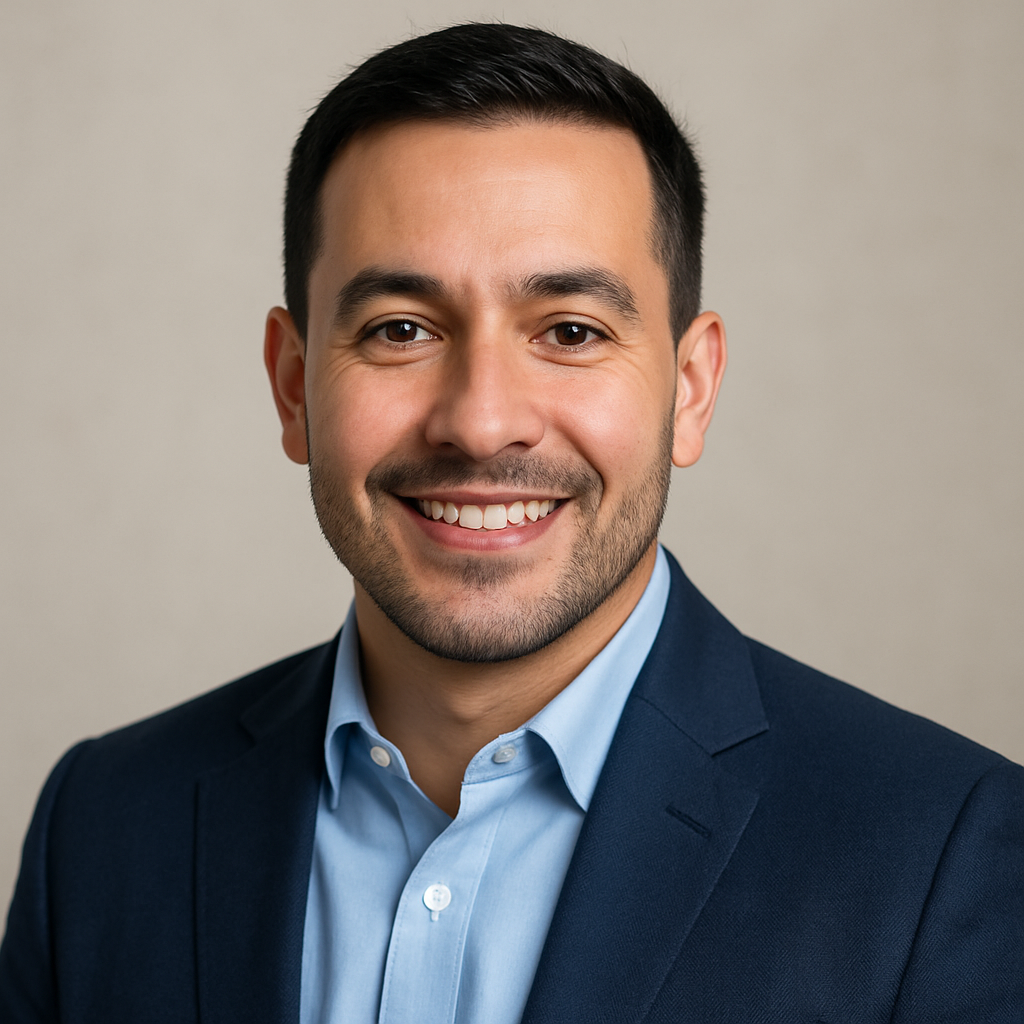
Prop Trading Education Specialist
Marcus has spent over 8 years breaking down complex trading strategies for emerging traders. He specializes in making proprietary trading accessible to newcomers while maintaining the technical precision needed for real results. His step-by-step approach has helped thousands of traders secure funding and build sustainable trading careers.

