Last updated

Want to know the real secret behind how prop firms work? Here's the truth: 83% of funded traders don't understand the actual Business Model behind Proprietary Trading Firms — and that lack of understanding costs them real money.
You've probably heard the success stories. Traders getting funded with $100,000 accounts. Monthly payouts hitting five figures. But how exactly does this whole system work? And more importantly — how do you actually make money from it?
I'm going to break down exactly how Prop Firms operate, what they're really looking for, and why some traders get funded while others keep failing evaluations. By the end of this, you'll understand the entire business model and know exactly how to position yourself for success.
prop firms make money by funding skilled traders with the firm's capital in exchange for a percentage of the profits. It's that simple.
Here's how the basic economics work: You pay an evaluation fee (industry estimates suggest $49-$989 depending on account size). If you pass their trading challenge, they give you real capital to trade. When you make profits, you keep 80-90% while they take 10-20%.
But there's more to it than that surface-level explanation.
The firm's revenue comes from three main sources. First, evaluation fees from traders taking challenges. Second, their profit share from successful funded traders. Third, inactive account fees and other service charges.
Most traders focus only on the profit split. That's a mistake. Understanding the full business model helps you pick better firms and avoid common pitfalls that kill trading careers before they start.
Think about it from their perspective. They need traders who can consistently generate profits while following risk management rules. They're not looking for home run hitters — they want consistent base hits.
Sign up and choose your ideal pro sign up to FundedX now p account.
The challenge process is your gateway to funded capital, and it's designed to test specific skills under controlled conditions.
Most firms offer multiple challenge types: 1-phase, 2-phase, and instant funding options. The 2-phase system is most common. In phase one, you typically need to hit an 8% profit target while staying within daily and overall drawdown limits. Phase two requires a 5% profit target with the same risk parameters.
Here's what actually happens during evaluation:
| Challenge Phase | Profit Target | Daily Drawdown | Max Drawdown | Duration |
|---|---|---|---|---|
| Phase 1 | 8% | 5% | 10% | Unlimited |
| Phase 2 | 5% | 5% | 10% | Unlimited |
| Funded Account | Consistency | 5% | 10% | Ongoing |
The challenge isn't just about hitting profit targets. Firms track your trading behavior, risk management, and consistency patterns. They want to see controlled, methodical trading — not gambling.
You're competing against historical data, not other traders. The firm wants you to succeed because successful traders generate long-term revenue. Failed challenges only provide one-time evaluation fees.
prop firms evaluate traders based on four key criteria: consistency, risk management, trading psychology, and scalability potential.
Consistency matters more than individual trade profits. They'd rather see 20 trades with 2% average gains than 5 trades with 8% gains. Why? Because consistent patterns predict future performance better than lucky streaks.
Risk management is non-negotiable. Violate daily drawdown limits even once, and you're out. This isn't about punishment — it's about protecting capital. Firms need traders who can preserve capital during losing periods.
Trading psychology gets tested through drawdown periods and pressure situations. Can you stick to your plan when down 3%? Do you revenge trade after losses? Firms monitor these behavioral patterns during challenges.
Scalability potential is the hidden factor most traders miss. Firms want traders who can manage larger accounts over time. that succeed long-term identify traders capable of handling $500K+ accounts eventually.
Your trading style must align with firm requirements. Some firms prohibit scalping, others restrict weekend holdings. Match your natural trading approach with firm rules, don't try to force incompatible styles.
Once you pass evaluation, firms use sophisticated capital allocation systems to determine your funding level and growth potential.
Initial funding typically matches your challenge account size. Pass a $100K challenge, get a $100K funded account. But here's where it gets interesting — most firms offer scaling programs based on performance.
Account scaling usually works like this: After 3-4 months of consistent profits, you can request account increases. Top performers might scale from $100K to $200K, then $400K, eventually reaching $1M+ in buying power.
The firm monitors several metrics during funded trading: monthly profit consistency, maximum drawdown periods, Sharpe ratio, and rule adherence. Hit their benchmarks consistently, and scaling becomes automatic.
Some firms use tiered capital systems. Your profit share increases as account size grows. Based on typical industry structures, you might start at 80% on a $50K account, scale to 85% on $200K, then 90% on $500K accounts. This incentivizes long-term partnership over quick profits.
Capital protection remains the priority. One major rule violation, even on a funded account, can result in account termination. This protects both the firm's capital and maintains program integrity for other traders.
The profit split is where prop firms and traders make their money — but the actual payout structure is more complex than most people realize.
Standard profit splits range from 70-90% in your favor. Higher splits usually come with stricter rules or higher evaluation fees. offer competitive splits, but always read the fine print.
Payout frequency varies by firm. Some offer weekly withdrawals, others monthly or bi-weekly. Faster payouts usually indicate better cash flow management and trader-focused policies.
Based on typical industry performance, the average successful prop trader earns $3,000-$8,000 monthly in their first year, with top performers reaching $15,000+ monthly by year two. These figures represent estimated ranges from tracking funded account performance across major firms.
Most firms require minimum profit thresholds before payouts. Typical minimums range from $50-$500 depending on account size. This covers transaction costs and ensures meaningful withdrawal amounts.
Refund policies matter more than most traders realize. Top firms refund evaluation fees after first withdrawal, creating genuine partnership rather than one-sided risk. This policy difference separates legitimate firms from evaluation mills.
tax implications vary by jurisdiction, but most prop traders are classified as independent contractors. Plan accordingly for quarterly tax payments and business expense deductions.
Risk management isn't just about profit protection — it's the foundation that makes the entire prop firm model work.
Every firm enforces strict drawdown limits for good reason. Daily drawdown limits (typically 5%) prevent catastrophic single-day losses. Overall drawdown limits (usually 10%) ensure long-term capital preservation.
Rule violations get tracked automatically through trading platforms. There's no arguing with the system — hit a drawdown limit by even 0.01%, and the account gets closed immediately.
Position sizing rules vary but typically limit individual trades to 1-2% of account equity. This prevents single-trade disasters while allowing meaningful profit potential.
Some firms prohibit specific strategies: news trading, hedging, copy trading, or high-frequency scalping. These restrictions protect against difficult-to-manage risk scenarios or unfair advantages.
The key insight: firms want predictable risk, not zero risk. They're fine with trading losses as long as they fall within defined parameters. Consistent rule-following matters more than perfect win rates.
Modern Prop Firms provide professional-grade trading infrastructure that most retail traders never access.
Platform options usually include MetaTrader 4/5, TradeLocker, and proprietary systems. Each platform offers different advantages: MT4/5 for Expert Advisors, TradeLocker for advanced order management, proprietary platforms for specialized tools.
Execution quality matters significantly at institutional level. Top firms provide sub-10ms execution speeds, institutional spreads, and direct market access. This infrastructure advantage can add 0.2-0.5 pips per trade compared to retail brokers.
Data feeds come from tier-1 providers, ensuring accurate pricing and minimal slippage. Real-time news integration helps traders react to market-moving events within seconds of release.
Risk monitoring systems track every trade in real-time. Position sizes, drawdown levels, and rule compliance get calculated continuously. This automation ensures fair enforcement and immediate feedback.
Some firms offer additional tools: economic calendars, sentiment indicators, correlation matrices, and performance analytics. These resources help traders make better decisions and improve their edge over time.
Understanding prop firm economics helps you pick better partners and avoid firms with unsustainable business models.
Industry estimates suggest successful firms maintain 15-25% of traders in funded status. Higher percentages suggest easier evaluations but potentially unsustainable economics. Lower percentages might indicate overly difficult challenges or evaluation mills.
Revenue diversification separates stable firms from risky ones. Firms relying solely on evaluation fees face pressure to make challenges artificially difficult. Those with strong profit-sharing revenue can offer fair evaluations.
Capital requirements are massive. A firm with 1,000 funded traders averaging $100K accounts needs $100M+ in trading capital plus operational reserves. Only well-capitalized firms can scale sustainably.
Payout consistency indicates financial health. Firms delaying withdrawals or changing terms frequently often face cash flow problems. Consistent, fast payouts suggest strong capital management.
Market conditions affect firm profitability significantly. During high-volatility periods, more traders hit profit targets, increasing payout obligations. Stable firms maintain sufficient reserves for these cycles.
Most prop firms require evaluation fees ranging from $49 for small accounts to $989 for larger challenges. You don't need trading capital beyond the evaluation fee since the firm provides all trading capital after you pass.
You're only responsible for following the firm's risk management rules. If you violate drawdown limits, the account gets closed, but you're not liable for losses beyond that point. The firm absorbs all capital losses.
Challenge completion time varies by trader skill and market conditions. Most successful traders complete 2-phase challenges within 2-8 weeks. After passing, funded accounts are typically activated within 24-48 hours.
Most strategies are allowed, but firms typically prohibit news trading, hedging, copy trading, and excessive scalping. Each firm has specific rules, so review requirements before starting challenges.
Legitimate prop firms have strong incentives to pay traders since successful traders generate ongoing revenue. However, research firm reputation and read withdrawal policies carefully before committing.
prop firms provide trading capital and share profits, while retail brokers just facilitate trades with your own money. Prop firms also enforce strict risk management rules and offer professional trading infrastructure.
The prop firm industry has matured significantly in 2026, offering genuine opportunities for skilled traders to access institutional capital and infrastructure. Success requires understanding both the business model and your role within it.
Focus on developing consistent, rule-based trading strategies rather than chasing quick profits. Treat prop firm challenges as job interviews — demonstrate the skills and discipline they're looking for, and funding will follow.
The key is matching your trading style with the right firm's requirements. Some traders thrive under strict rules, others need more flexibility. Research thoroughly and choose firms aligned with your natural approach to trading.
Sign up and choose your ideal pro sign up to FundedX now p account.
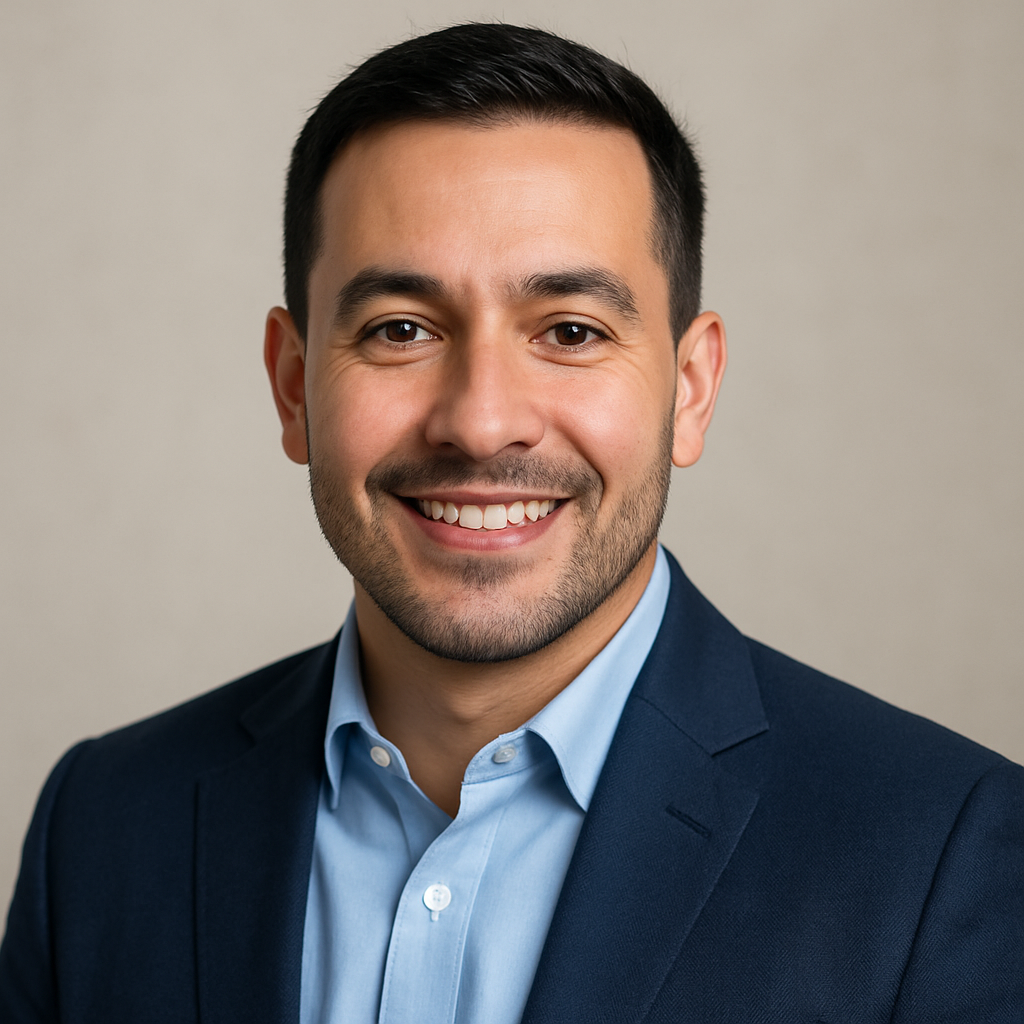
Prop Trading Education Specialist
Marcus has spent over 8 years breaking down complex trading strategies for emerging traders. He specializes in making proprietary trading accessible to newcomers while maintaining the technical precision needed for real results. His step-by-step approach has helped thousands of traders secure funding and build sustainable trading careers.

