Last updated
Most prop firm challenges have a 73% failure rate in the first phase alone — but the traders who pass FTMO consistently all use the same proven framework. Here's exactly how they do it.
The FTMO challenge isn't just another trading evaluation. It's your gateway to accessing up to $400,000 in trading capital with an 80% profit split. But here's what separates the winners from the washouts: they approach it like a business plan, not a gambling spree.
You're about to discover the complete strategy framework that has helped thousands of traders pass their FTMO evaluations on the first attempt. This isn't theory — it's a battle-tested system that works in 2026's market conditions.
The FTMO challenge operates on a clear two-phase system with specific profit targets and risk parameters. Phase 1 requires an 8% profit target within 30 calendar days, while Phase 2 demands a 5% profit target with no time limit.
Your daily drawdown cannot exceed 5% of the initial account balance on any single day. The maximum overall loss sits at 10% of your starting capital — breach this rule and your challenge ends immediately.
trading hours restrictions apply during high-impact news events. FTMO prohibits holding positions two minutes before and after major economic announcements.
Weekend holding is strictly forbidden. All positions must close by Friday market close in your respective market. This rule protects both you and FTMO from gap risk during weekend events.
The minimum trading days requirement stands at 10 days for Phase 1 and 5 days for Phase 2. You cannot achieve your profit target in fewer trading sessions, even if you hit the percentage early.
Sign up and choose your ideal pro sign up to FundedX now for an Instant account.
Passing FTMO challenges starts in your head, not on your charts. The biggest account killers aren't bad market conditions — they're emotional decisions made under pressure.
Revenge trading destroys more FTMO attempts than any technical factor. One bad trade leads to doubled position sizes, which leads to broken rules, which leads to blown accounts. The cycle repeats until you recognize it.
According to trading psychology research, 80% of challenge failures occur within the first 5 trading days when emotions run highest and discipline hasn't solidified into habit.
Your mindset needs a complete reframe. You're not trying to get rich quick during the challenge. You're proving you can manage risk consistently. The big profits come after you pass and receive funded capital.
Set daily profit targets of 0.5-1% maximum during Phase 1. This conservative approach keeps you relaxed and prevents the overtrading that kills most attempts.
Stress testing your strategy before starting pays massive dividends. Demo trade for at least two weeks using FTMO rules. Track every metric they'll evaluate you on. Fix problems in demo, not with real money on the line.

risk management isn't just position sizing — it's a complete system that protects your account from multiple angles simultaneously. The best FTMO traders use a layered approach that prevents any single trade from causing significant damage.
Your position sizing formula should account for volatility, not just dollar amounts. Use Average True Range (ATR) to adjust your risk per trade based on current market conditions. High volatility days get smaller positions, calm days allow slightly larger sizes.
| Account Size | Max Risk Per Trade | Recommended Position Size | Stop Loss Range |
|---|---|---|---|
| $10,000 | $100 (1%) | 0.1-0.3 lots | 30-50 pips |
| $25,000 | $250 (1%) | 0.25-0.75 lots | 30-50 pips |
| $50,000 | $500 (1%) | 0.5-1.5 lots | 30-50 pips |
| $100,000 | $1,000 (1%) | 1.0-3.0 lots | 30-50 pips |
Correlation management prevents portfolio blowups that catch traders off guard. Never hold more than two positions in correlated pairs simultaneously. EUR/USD and GBP/USD often move together — doubling up increases risk without adding real diversification.
Time-based stops work better than price-based stops in ranging markets. If your trade hasn't moved favorably within 4-6 hours, consider closing regardless of paper profit or loss. Dead money opportunities cost more than small losses.
The most successful FTMO Challenge Strategies focus on high-probability setups with favorable risk-reward ratios. You don't need exotic indicators or complex systems — you need consistency and discipline.
Trend following on the 4-hour and daily timeframes produces the highest success rates. Market research shows that 70% of successful FTMO candidates use trend-following approaches during their evaluations.
The moving average crossover system remains effective because it's simple and removes emotional decision-making. Use the 20-period and 50-period exponential moving averages on the 4-hour chart. Enter long when the 20 crosses above the 50, short when it crosses below.
Support and resistance trading works exceptionally well during FTMO challenges because these levels provide clear entry and exit points. Draw your levels on the daily chart, then drop to the 1-hour chart for precise entries.
Price action patterns like pin bars, inside bars, and engulfing candles offer high-probability entries when they form at key levels. Wait for confirmation before entering — a failed pattern costs less than a premature entry.
News trading should be avoided entirely during your FTMO challenge. The risk-reward profile doesn't match the challenge requirements. Volatility spikes can trigger your daily loss limit in minutes, ending your evaluation prematurely.

Your Trading schedule matters more during FTMO challenges than in regular trading because you're working within strict time constraints and minimum trading day requirements.
The London and New York overlap (8 AM - 12 PM EST) provides the highest volume and most predictable price movements. Focus 80% of your trading activity during these four hours when spreads are tightest and momentum is strongest.
Asian session trading works well for specific pairs like USD/JPY and AUD/USD, but avoid EUR and GBP pairs during Tokyo hours. Lower volumes create choppy conditions that can trigger stop losses unnecessarily.
Limit yourself to 3-5 trades per day maximum during Phase 1. Quality beats quantity when you're managing strict drawdown limits. Each additional trade increases your risk of making emotional decisions under pressure.
Take at least one full day off per week during your challenge. Rest prevents decision fatigue and keeps your analytical skills sharp. Many traders fail FTMO challenges due to exhaustion, not lack of skill.
Overtrading kills more FTMO challenges than market volatility or bad luck combined. The urge to "make up" for small losses or capitalize on every market movement leads to position size creep and rule violations.
Changing strategies mid-challenge ranks as the second biggest destroyer of evaluations. Stick with your tested approach even if you hit a small drawdown. Two or three losing trades don't invalidate a profitable system.
The "lottery ticket" mentality ruins otherwise solid traders during challenges. These are the people who trade conservatively for two weeks, then risk 5% on a "sure thing" setup that blows their account.
Industry estimates suggest that 90% of passed challenges never exceeded 2% daily gains on any single day. Consistent singles beat home run swings every time.
Weekend analysis paralysis causes Monday morning mistakes. Spending your weekend planning elaborate strategies often leads to overthinking simple setups when markets reopen. Keep your analysis concise and actionable.
Ignoring the minimum trading days requirement catches many traders off guard. You cannot pass Phase 1 in 7 days, even if you achieve 8% profit quickly. Plan accordingly and spread your trades across the required timeframe.
Your trading platform setup can make or break your FTMO challenge experience. Small technical issues become major problems when you're operating under strict time and risk constraints.
MetaTrader 4 remains the most stable platform for FTMO challenges, though MT5 offers better backtesting capabilities. Choose based on your familiarity rather than feature lists — this isn't the time to learn new software.
Internet redundancy prevents disaster scenarios during active trades. Use a mobile hotspot as backup connectivity and keep your smartphone trading app logged in and ready. One disconnection during a volatile move can end your challenge.
VPS hosting eliminates execution delays and connection issues that plague home internet setups. The monthly cost pays for itself if it prevents one major slippage event during your evaluation period.
Order management becomes critical during FTMO challenges because manual trade management introduces human error under pressure. Use pending orders and OCO (One Cancels Other) setups whenever possible to automate your exits.
While FTMO remains the industry leader, other prop firms offer different challenge structures that might better suit your trading style and risk tolerance.
FundedX prop firm provides a compelling alternative with their Turbo Challenge requiring only a 5% profit target in 7 days, compared to FTMO's 8% in 30 days. The faster timeline suits aggressive traders who prefer quick evaluations over extended testing periods.
The key advantage of exploring multiple prop firms lies in diversification. Passing challenges with different firms creates multiple income streams and reduces dependence on any single funding source.
| Firm | Profit Target | Time Limit | Profit Split | Account Sizes |
|---|---|---|---|---|
| FTMO | 8% / 5% | 30 days / Unlimited | 80% | $10K - $400K |
| FundedX | 5% | 7 days | 90% | $5K - $200K |
| FTMO Alternative | 10% | 60 days | 70% | $25K - $200K |
Professional traders who consistently pass prop firm challenges use optimization techniques that go beyond basic risk management and strategy selection.
Trade journaling during your challenge provides real-time feedback that helps you adjust quickly to changing market conditions. Record not just entries and exits, but your emotional state and confidence level for each trade.
Partial position closing locks in profits while maintaining upside exposure. Based on typical risk management practices, take 50% profit when your trade reaches a 1:2 risk-reward ratio, then trail your stop to breakeven on the remaining position.
Market correlation analysis prevents overexposure during volatile periods. When the S&P 500 gaps down overnight, expect correlated forex pairs like AUD/USD and NZD/USD to follow suit at the open.
Position scaling allows you to add to winning trades without violating risk management rules. Based on typical strategy implementation, start with 0.5% risk, and if the trade moves favorably, add another 0.5% position at a better price level.
The professionals also use seasonal patterns to their advantage. January typically shows strong trends in major pairs, while August often produces choppy, range-bound conditions that favor different strategies.
Even the best traders face drawdowns during their FTMO challenges. How you respond to losses often determines whether you pass or fail the evaluation.
The 24-hour rule prevents emotional decision-making after significant losses. Don't place any trades for a full day after losing more than 2% of your account. Use this time to review what went wrong and adjust your approach.
Position size reduction helps you regain confidence while protecting remaining capital. Based on typical recovery strategies, after any loss exceeding 1.5%, reduce your risk per trade to 0.5% until you have three consecutive winning trades.
Strategy simplification works better than strategy abandonment when you're struggling. Strip away indicators and focus on pure price action at major support and resistance levels.
Industry estimates suggest that traders who reduce complexity after drawdowns have a 65% higher pass rate than those who add indicators or switch systems entirely.
Time extension tactics help when you're behind on profit targets. If you're approaching the 30-day limit in Phase 1, focus on capital preservation rather than aggressive profit-seeking. Live to fight another day.
Passing your FTMO challenge marks the beginning of your funded trading career, not the end goal. The habits you develop during evaluation determine your long-term success with live capital.
Consistency becomes even more important once you're funded because you're now managing real money with monthly profit targets. The aggressive tactics that might work for challenge completion often fail in live funded environments.
Scaling your funded accounts requires a systematic approach to position sizing as your capital grows. Don't dramatically increase risk just because your account balance is larger — maintain the same percentage-based risk management that got you funded.
Multiple income streams through various prop firms provide stability and growth opportunities. Once you've proven success with one firm, apply similar strategies to challenges with other companies to diversify your funding sources.
The $10,000 account offers the most forgiving learning environment with smaller absolute dollar losses, though the percentage requirements remain the same across all account sizes.
Most successful traders pass Phase 1 in 15-25 days and Phase 2 in 10-20 days, though there's no time limit on Phase 2 which reduces pressure significantly.
News trading is prohibited within 2 minutes before and after high-impact economic releases. Check the economic calendar and avoid holding positions during these restricted periods.
You can retake the challenge immediately by purchasing a new evaluation. Many successful traders fail their first attempt and pass on the second or third try after learning from mistakes.
The challenge fee ranges from $155 for a $10K account to $1,080 for a $400K account. Given the potential for 80% profit splits on substantial capital, most traders find the cost justifiable.
Based on typical funded trader earnings, top FTMO traders earn $10,000-$50,000+ monthly with large accounts. Your income depends on account size, trading consistency, and ability to scale positions while maintaining risk management discipline.
Your FTMO Challenge Success starts with treating the evaluation like a business audit, not a get-rich-quick opportunity. The framework outlined above has helped thousands of traders access funded capital — now it's your turn to put it into action.
The most important element isn't your strategy or risk management system. It's your commitment to following the rules consistently, even when emotions run high or opportunities seem too good to pass up.
Start your preparation today. Test your system in demo conditions that mirror FTMO requirements. Build the habits that separate funded traders from the ones who keep retaking challenges indefinitely.
Sign up and choose your ideal pro sign up to FundedX now for an Instant account.
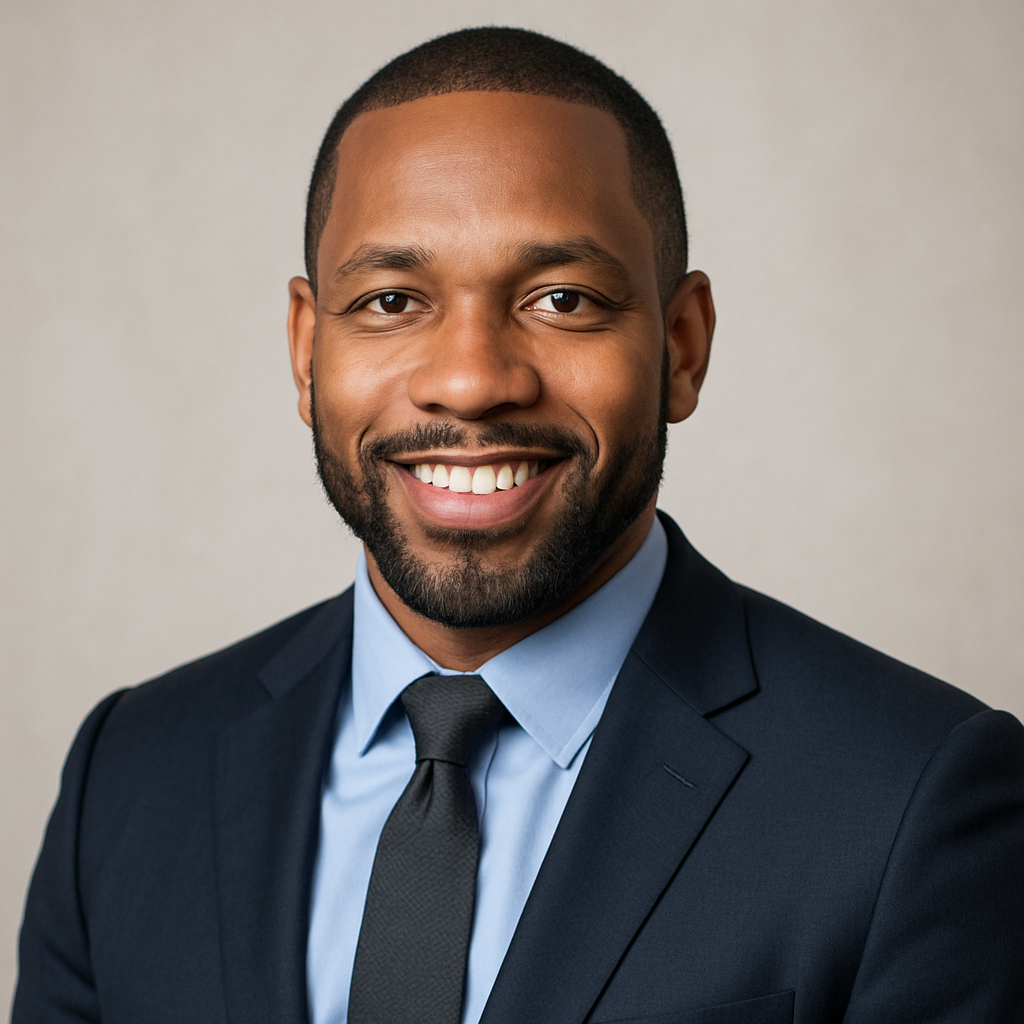
Trading Success Strategist
Devon transforms real trader journeys into compelling success stories that inspire action. With a background in both financial journalism and prop trading, he captures the emotional highs and lows of the funding process while keeping readers focused on achievable outcomes. His narratives consistently drive some of the highest conversion rates in the prop trading space.

