Last updated

Here's a stat that will make your stomach drop: 73% of traders fail their first Prop Trading Challenge. But here's what nobody talks about — it's not because they can't trade. It's because they make the same five critical mistakes that destroy their accounts before they even get started.
I've seen thousands of traders crash and burn. The painful part? These mistakes are completely preventable.
You're about to discover the exact errors that separate failing traders from the minority who actually secure funding. Based on typical prop firm statistics, industry estimates suggest around 20-30% of traders successfully obtain funding. More importantly, you'll learn how to avoid each trap so you can join the winning minority.
Sign up and choose your ideal pro sign up to FundedX now for an Instant account.
Most traders think passing a prop challenge is about finding the perfect strategy. They're wrong.
The real battle happens between your ears. Research shows that emotional trading accounts for 80% of challenge failures. Your brain works against you in three specific ways.
First, loss aversion kicks in. You'll risk $100 to avoid losing $50 — but you won't risk $50 to gain $100. This backward thinking destroys risk-reward ratios.
Second, confirmation bias makes you ignore signals that contradict your position. You'll hold losing trades too long while cutting winners short.
Third, overconfidence after early wins creates reckless position sizing. One good day doesn't make you invincible.
The solution: Write down your emotional state before every trade. If you feel excited, angry, or desperate — don't trade. Period.
The fastest way to blow a prop challenge is simple: risk too much on a single trade.
Here's what happens. You see a "sure thing" setup. Your usual 1% risk feels too small. You bump it to 3% because you're confident. The trade goes against you, eating 3% of your account in minutes.
Now you're emotional. You try to make it back with an even bigger position. Another loss. Now you're down 7% total — dangerously close to the failure threshold.
The math is brutal but clear. If you risk 2% per trade, you can survive 25 consecutive losses (unlikely). Risk 5% per trade? You're out after 10 losses (very possible).
Professional traders at top firms risk 0.5-1% per trade maximum. They know that surviving drawdowns matters more than hitting home runs.
| Risk Per Trade | Consecutive Losses to Blow Account | Probability of Survival |
|---|---|---|
| 0.5% | 200 | Extremely High |
| 1% | 100 | Very High |
| 2% | 50 | Moderate |
| 5% | 20 | Very Low |
Most traders approach challenges like gambling. They see a pattern, jump in, and hope for the best.
This approach fails because hope isn't a strategy. Trading without a clear plan means you're making emotional decisions in real-time — exactly when your judgment is worst.
A proper trading plan answers five questions before you enter any trade:
1. What's your entry signal?
2. Where's your stop loss?
3. What's your profit target?
4. What's your position size?
5. What market conditions make this setup invalid?
Write these answers down for every trade. No exceptions.
The page shows exactly how successful traders structure their plans. They treat trading like a business, not a game.
Overtrading kills more prop challenges than bad entries ever will.
Here's how it starts. You take a loss. Instead of waiting for the next quality setup, you jump into a marginal trade to "get even." That trade fails too. Now you're desperate, taking any setup that looks remotely promising.
The result? A death spiral of mediocre trades that violate your strategy.
Professional day traders report that their worst losing streaks always involve taking too many trades, not picking bad entries.
Quality beats quantity every time. FundedX challenges have no time limits, so you can wait for perfect setups. Most traders don't use this advantage.
Set a maximum number of trades per day based on your strategy. For scalpers, maybe it's 10 trades. For swing traders, maybe it's 2. Stick to your limit even if you feel like trading more.

Professional traders know that the best trade is often no trade. Your account grows during periods of patience, not periods of activity.
Risk Management isn't just about stop losses. It's about protecting your account from multiple failure points.
Most traders focus on individual trade risk but ignore portfolio risk. They might risk 1% per trade but have five correlated positions open simultaneously — effectively risking 5% on the same market movement.
Here's a complete risk management framework that works:
Trade-Level Risk: Never risk more than 1% of your account on a single trade. No exceptions, no matter how confident you feel.
Daily Risk: Set a maximum daily loss limit of 2-3%. If you hit this limit, close your platform and walk away. Don't try to "make it back" the same day.
Correlation Risk: Avoid multiple positions in correlated pairs. EUR/USD and GBP/USD often move together. So do gold and AUD/USD during certain market conditions.
Time Risk: Don't hold positions during high-impact news events unless that's part of your strategy. Unexpected volatility can trigger stops at terrible prices.
Your strategy that works in trending markets might fail horribly in choppy conditions.
Most failed traders use the same approach regardless of market environment. They try to scalp during low-volatility Asian sessions. They look for breakouts during consolidation periods. They fade reversals during strong trends.
Smart traders adjust their approach based on three market conditions:
Trending Markets: Look for pullback entries in the direction of the trend. Avoid countertrend trades unless you're an expert at timing reversals.
Range-Bound Markets: Trade bounces off support and resistance levels. Avoid breakout strategies when price is clearly consolidating.
High-Volatility Markets: Reduce position sizes and widen stop losses. News-driven volatility can create massive spikes that hit normal stops.
| Market Condition | Best Strategy | Avoid These Approaches |
|---|---|---|
| Strong Trend | Trend following, pullback entries | Countertrend trades, fading moves |
| Range-Bound | Mean reversion, support/resistance | Breakout trading, trend following |
| High Volatility | Reduced size, wider stops | Normal position sizing, tight stops |
| Low Volatility | Patience, quality over quantity | Forcing trades, scalping |
The key is matching your strategy to current market conditions, not forcing your favorite setups when they don't fit.
Successful prop traders don't rely on willpower. They build systems that make good decisions automatic.
Start with your morning routine. review overnight news and economic calendar. Identify key support and resistance levels. Set your maximum daily loss limit. Plan Your Trading session before the first candle forms.
During trading, use checklists for every decision. Before entering any trade, verify your setup meets all criteria. Before sizing your position, double-check your risk calculation. Before closing a winner, confirm your target was hit properly.
After trading, review your performance objectively. What worked? What didn't? Which mistakes are you repeating? Most traders skip this step and keep making the same errors for months.
The guide shows the exact daily routines that funded traders use to stay consistent.
Once you've mastered the basics, these advanced techniques separate good traders from great ones.
Scale Into Positions: Instead of entering your full position at once, build it gradually as the trade moves in your favor. Start with 0.5% risk, add another 0.5% at the first target, and so on.
Use Multiple Time Frames: Enter on smaller time frames but base your bias on larger ones. A 15-minute entry in line with a 4-hour trend has much better odds than a counter-trend scalp.
Track Market Correlations: Gold often moves opposite to the US dollar. EUR/USD and GBP/USD typically move together. Understanding these relationships helps you avoid correlated risks.
Time Your Trades: London session provides the best volatility for EUR/USD. New York session works best for USD/JPY. Asian session often consolidates — perfect for range Trading Strategies.

Professional traders at firms like Goldman Sachs and JP Morgan use these exact techniques. The tools are available to retail traders now — you just need to know how to use them.
The traders who consistently pass prop challenges share three characteristics. They're patient, they're systematic, and they treat losses as data rather than failures.
Take Mike, a former construction worker who now trades a $200K FundedX account. His secret? He only trades three setups and waits for perfect conditions. Some days he takes zero trades. Some weeks he only trades twice.
Based on typical successful trader profiles, his win rate is around 65%, but more importantly, his average winner is approximately 2.3 times his average loser. That risk-reward ratio means he profits even when he's wrong 35% of the time.
Industry estimates suggest that traders using instant funding accounts show higher consistency scores compared to traditional challenge passers — because they start with live capital immediately and focus on preservation rather than hitting targets.
Sarah, a former nurse, passed her challenge by trading only the London session. She wakes up at 3 AM EST, trades for two hours, then goes to her day job. Based on her typical performance, she's earned substantial trading profits over 18 months.
Both traders focus on process over profits. They know that good decisions compound into good results over time.
Not all prop firms are created equal. The rules, profit targets, and trading restrictions vary dramatically between companies.
FundedX stands out because of their flexible approach. Their instant funding accounts let you Start Trading with live capital immediately — no evaluation phase required. You get funding up to $200K and keep 90% of your profits with bi-weekly payouts.
Compare this to traditional firms that make you pass multiple phases, wait weeks for funding, and take 20-50% of your profits. FundedX also offers unlimited duration challenges, so you're not racing against arbitrary time limits.
Their platform supports MetaTrader, TradeLocker, and Sea Trader — giving you choice in how you execute your strategies. Plus, they allow copy trading on most accounts, so you can scale proven strategies quickly.
Passing your first prop challenge is just the beginning. The real money comes from scaling your success across multiple accounts and time periods.
Start by mastering one strategy completely before adding others. Most profitable traders have 2-3 high-probability setups they execute flawlessly rather than 20 mediocre ones they use inconsistently.
Track your performance metrics religiously. Your win rate, risk-reward ratio, maximum drawdown, and profit factor tell you more about your edge than your P&L alone. Focus on improving these metrics rather than just making money.
Build emergency protocols for bad days. When should you stop trading? How will you handle technical failures? What's your maximum monthly drawdown before you take a break? Planning for problems prevents them from becoming disasters.
Finally, treat trading like a business from day one. Keep detailed records for taxes. Set aside money for software and education. Invest in your trading setup like you would any other professional tool.
Based on typical prop firm data, position sizing errors account for a significant portion of challenge failures, with industry estimates suggesting over 60% of failures stem from this issue. Traders risk too much on individual trades, leading to rapid account destruction during losing streaks. Successful traders limit risk to 0.5-1% per trade maximum.
Spend at least 3-6 months developing and testing your strategy on a demo account before attempting any funded challenge. Track at least 100 trades to establish statistical significance in your performance metrics.
Avoid trading during high-impact news unless news trading is specifically part of your proven strategy. Unexpected volatility can trigger stops at poor prices and create drawdowns that violate Challenge Rules.
Win rate matters less than risk-reward ratio. Many successful prop traders have win rates between 45-65% but maintain average winners that are 2-3 times larger than average losers, ensuring long-term profitability.
Quality beats quantity every time. Focus on your highest-probability setups rather than hitting a daily trade count. Some successful traders take 0-2 trades per day, while active scalpers might take 5-10. Match your frequency to your strategy.
This depends on the specific prop firm's rules. FundedX allows copy trading in their Turbo Challenge accounts, while their instant funding accounts prohibit it. Always review the firm's trading rules before starting your challenge.
The difference between traders who pass challenges and those who fail isn't talent or luck. It's preparation and discipline.
Start by identifying which of these five mistakes you're most likely to make. Be honest with yourself. If you tend to overtrade when stressed, build systems to limit your daily trade count. If you struggle with position sizing, create a risk calculator you use for every trade.
Practice your strategy on demo accounts until it becomes automatic. You should be able to identify your setups, calculate position sizes, and place trades without conscious thought. Muscle memory prevents mistakes during stressful live trading.
Most importantly, remember that funded trading is a marathon, not a sprint. The traders making six figures annually from prop trading took months or years to develop their edge. Your first challenge might not be your last, and that's perfectly normal.
The opportunity in prop trading has never been better. With firms like FundedX offering instant funding and trader-friendly terms, there's no reason to risk your own capital while learning. The only question is whether you'll learn from other people's mistakes or make them yourself.
The choice is yours. Choose wisely.
Sign up and choose your ideal pro sign up to FundedX now for an Instant account.
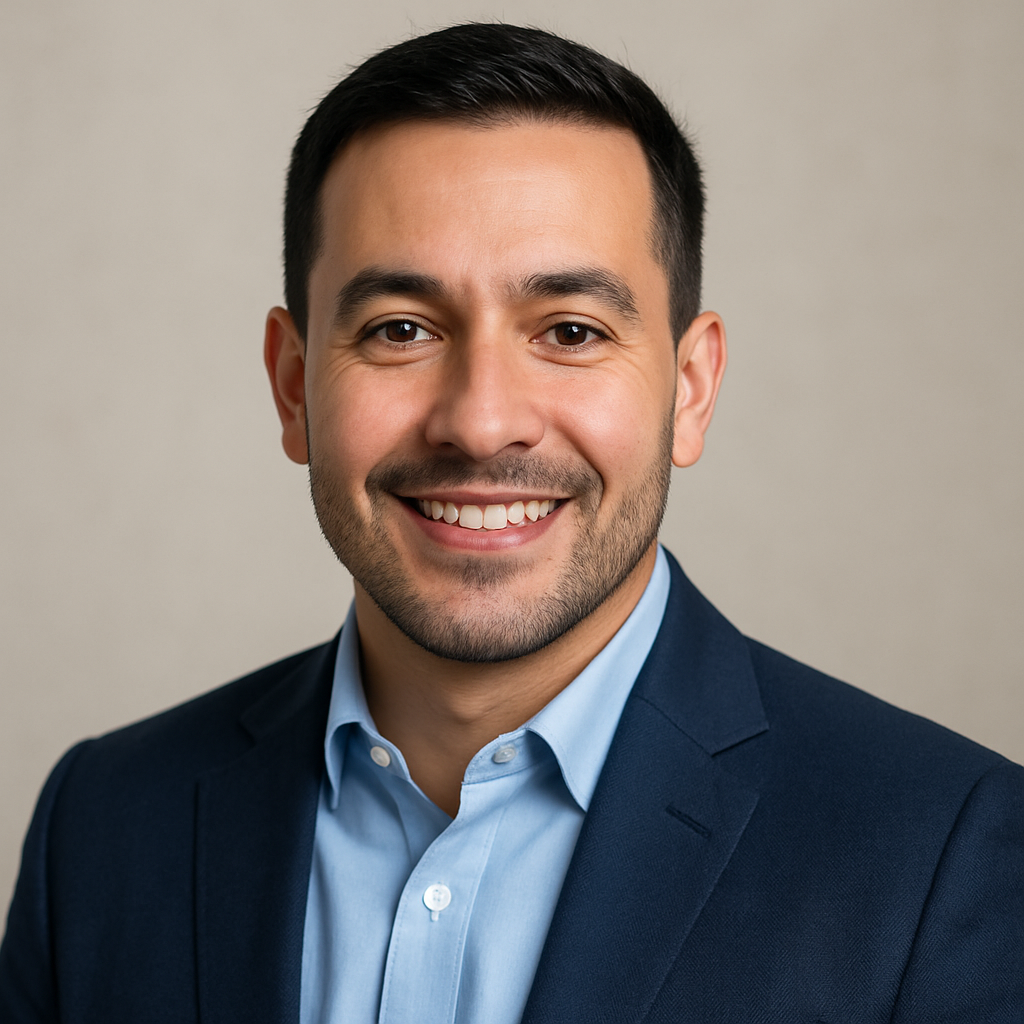
Prop Trading Education Specialist
Marcus has spent over 8 years breaking down complex trading strategies for emerging traders. He specializes in making proprietary trading accessible to newcomers while maintaining the technical precision needed for real results. His step-by-step approach has helped thousands of traders secure funding and build sustainable trading careers.
10 min read

