Last updated
Calculating your funded account value proposition helps you pick the right prop firm challenge. Most traders skip this step and waste hundreds of dollars on the wrong account size.
A value proposition shows what you get versus what you pay. For funded accounts, you compare challenge costs against potential profits. Smart traders run these numbers before buying any challenge.
The math reveals which account sizes give you the best return on investment. You want maximum profit potential with minimum upfront risk. Getting this calculation right can save you thousands in wasted fees.

Sign up and choose your ideal pro sign up to FundedX now for an Instant account.
A funded account's value comes from three main factors: profit potential, cost efficiency, and risk management.
Profit potential depends on your account size and profit split. A $100K account with 90% profit split gives you more earning power than a $50K account with 80% split. Industry estimates suggest most prop firms offer splits between 70% and 90%.
Cost efficiency measures how much you pay versus what you can earn. Lower challenge fees with higher profit targets create better value. Based on typical market rates, some firms charge $500 for a $100K challenge while others charge $300.
Risk management protects your investment. Strict drawdown rules might seem limiting but they prevent total loss. The best value proposition balances earning potential with account protection.
The funded account value formula is straightforward: (Monthly Profit Potential - Challenge Cost) / Challenge Cost = Value Ratio.
Monthly profit potential equals your account size times your realistic monthly return times your profit split. For example, a $100K account with 5% monthly returns and 90% split gives you $4,500 monthly profit potential.
Challenge cost includes your evaluation fee plus any recurring costs. If you pay $500 for the challenge and $50 monthly platform fees, your first month cost is $550.
Using our example: ($4,500 - $550) / $550 = 7.18 value ratio. This means you get $7.18 in value for every $1 you spend.
| Account Size | Challenge Fee | Monthly Profit (5%) | Value Ratio |
|---|---|---|---|
| $25K | $189 | $1,125 | 4.95 |
| $50K | $289 | $2,250 | 6.78 |
| $100K | $489 | $4,500 | 8.20 |
| $200K | $689 | $9,000 | 12.06 |
Profit targets determine how much you need to earn before getting funded. Different firms use different target structures that affect your value calculation.
Based on typical prop firm requirements, single-phase challenges typically require 8-10% profit to pass. Two-phase challenges split this into 8% for phase one and 5% for phase two. Consistency requirements add another layer of complexity.
Calculate your expected time to reach these targets. If you average 2% monthly returns, an 8% target takes about 4 months. Factor in potential drawdown periods that might extend this timeline.
Some traders prefer instant funding to skip evaluation phases entirely. FundedX offers instant funding from $5K to $800K accounts. The trade-off is higher upfront costs but immediate access to capital.
Understanding all costs helps you calculate true value. Challenge fees are just the beginning - monthly costs add up over time.
Evaluation fees range from FundedX's $60 for a $5K challenge to $5,000 for an $800K instant funding account. Compare these against your expected monthly earnings to find the sweet spot.
Monthly platform fees vary by firm. Some charge $50-100 monthly while others include platform access in the challenge fee. Factor these into your ongoing cost calculations.
Reset fees apply when you fail a challenge and want to retry. Some firms offer discounted resets while others charge full price. Budget for at least one reset attempt in your calculations.

Based on typical market rates, platform subscription fees can add $30-50 monthly to your costs. VPS hosting for automated trading adds another $20-40 monthly. These small costs compound over time.
Withdrawal fees reduce your net profits. Some firms charge flat fees while others take percentages. Factor these into your monthly profit calculations.
Tax implications vary by location but can significantly impact your net returns. Consult a tax professional to understand your obligations as a funded trader.
Risk assessment protects your investment by factoring in potential losses. The best value proposition balances profit potential with loss protection.
Drawdown limits determine your maximum allowed loss. Tighter limits offer more protection but restrict your trading flexibility. The 2% rule suggests never risking more than 2% per trade.
Daily loss limits add another safety layer. FundedX Turbo Challenge allows 3% daily drawdown while maintaining 4% overall loss limits. These rules prevent catastrophic losses but require careful position sizing.
Calculate your historical drawdown periods to understand your risk profile. If you typically see 15% drawdowns, choose firms with higher loss limits to avoid rule violations.
Different account sizes offer unique value propositions depending on your trading capital and experience level. Smaller accounts cost less but limit profit potential.
$5K-25K accounts work well for new traders learning prop firm rules. Lower fees mean less financial risk if you fail evaluations. However, profit potential remains limited even with successful completion.
$50K-100K accounts hit the sweet spot for most traders. Reasonable fees with solid profit potential create attractive value ratios. These sizes allow meaningful income without overwhelming evaluation costs.
$200K+ accounts offer maximum profit potential but require larger upfront investments. These work best for experienced traders with proven track records and sufficient backup capital.
Smart traders start small and scale up after proving profitability. Begin with a $25K account to learn the rules, then move to larger sizes once consistent.
Some firms offer scaling programs that increase your account size based on performance. FundedX provides leverage up to $10 million for successful traders who follow their scaling protocols.
Multiple accounts can increase total profit potential. Instead of one $100K account, consider two $50K accounts to diversify risk while maintaining earning power.
Different prop firms structure their offers differently, creating varied value propositions for similar account sizes.
FundedX stands out with competitive pricing and flexible rules. Their 90% profit split beats most competitors while offering both challenge and instant funding options. The 115% refund fees policy provides additional value protection.
FTMO focuses on strict evaluation processes but offers proven track records. Their higher fees reflect more comprehensive trader education and support systems.
Smaller firms often compete with lower fees but may lack the infrastructure for reliable payouts. Factor reputation and payout history into your value calculations.
| Feature | FundedX | FTMO | Standard Market |
|---|---|---|---|
| Profit Split | 90% | 80% | 75-80% |
| Payout Frequency | Bi-weekly | Monthly | Monthly |
| Challenge Duration | Unlimited | 30 days | 30-60 days |
| Refund Policy | 115% | 100% | None |

Let's walk through actual value calculations using real trader scenarios and current market pricing.
Sarah, a swing trader, averages 3% monthly returns with moderate drawdowns. She's considering a $100K FundedX account costing $489. Her monthly profit potential: $100K × 3% × 90% = $2,700. Value ratio: ($2,700 - $489) / $489 = 4.52.
Mike focuses on scalping with 8% monthly returns but higher volatility. He's looking at a $25K account costing $189. His calculation: $25K × 8% × 90% = $1,800 monthly. Value ratio: ($1,800 - $189) / $189 = 8.52.
Both traders get positive value ratios, but Mike's aggressive style creates higher returns on smaller capital. However, his approach carries more risk of rule violations.
One FundedX trader reported earning $15,000 in their first three months with a $200K account, achieving a 400% return on their $689 challenge investment.
Conservative traders should factor longer timeframes into their calculations. If you take 6 months to reach profit targets, divide your monthly profit by 6 to get realistic first-month returns.
Aggressive traders can achieve faster profits but face higher failure rates. Research suggests that mathematical approaches to prop firm challenges increase pass rates by up to 300%.
Factor your personality and risk tolerance into value calculations. A high-value account that doesn't match your trading style offers no real value.
Several online tools help automate value proposition calculations for funded accounts.
Risk Coach Pro's calculator helps determine optimal position sizes and risk management for prop firm rules. This prevents costly rule violations that waste your evaluation investment.
Trader's Second Brain offers comprehensive calculators that compare multiple firms and account sizes. Input your trading stats to see which options offer the best value.
Create your own spreadsheet to track multiple scenarios. Include columns for account size, fees, profit targets, your expected monthly returns, and calculated value ratios.
Choose the account size and firm that offers the best risk-adjusted value for your current skill level. Don't chase the highest absolute profits if the risk doesn't match your capital.
Start with smaller accounts to prove your system works within prop firm rules. Scale up gradually as you demonstrate consistent profitability and rule compliance.
Consider multiple smaller accounts instead of one large account. This spreads risk while maintaining profit potential. Two $50K accounts might offer better value than one $100K account.
Factor in your learning curve when calculating timeframes. Most traders need 2-3 attempts to pass their first evaluation as they adapt to new rules and pressure.
Ready to put your calculations into action? FundedX offers the best value proposition in 2026 with 90% profit splits, bi-weekly payouts, and accounts up to $800K. Buy now and start trading with professional capital.
Most traders find $25K accounts provide enough profit potential to justify the evaluation costs. Smaller accounts work for learning but limit income potential even with perfect execution.
Subtract your estimated tax rate from your profit split percentage. If you keep 90% of profits but pay 25% taxes, your effective split becomes 67.5%. Always consult a tax professional for accurate calculations.
Instant funding costs more upfront but eliminates evaluation risk and delays. Choose instant funding if you have proven profitability and want immediate access to capital. Choose challenges if you're still developing your skills.
Budget for 2-3 evaluation attempts when starting prop trading. Most traders fail their first attempt while learning the rules. Experienced traders typically pass within 1-2 attempts.
Sign up and choose your ideal pro sign up to FundedX now for an Instant account.
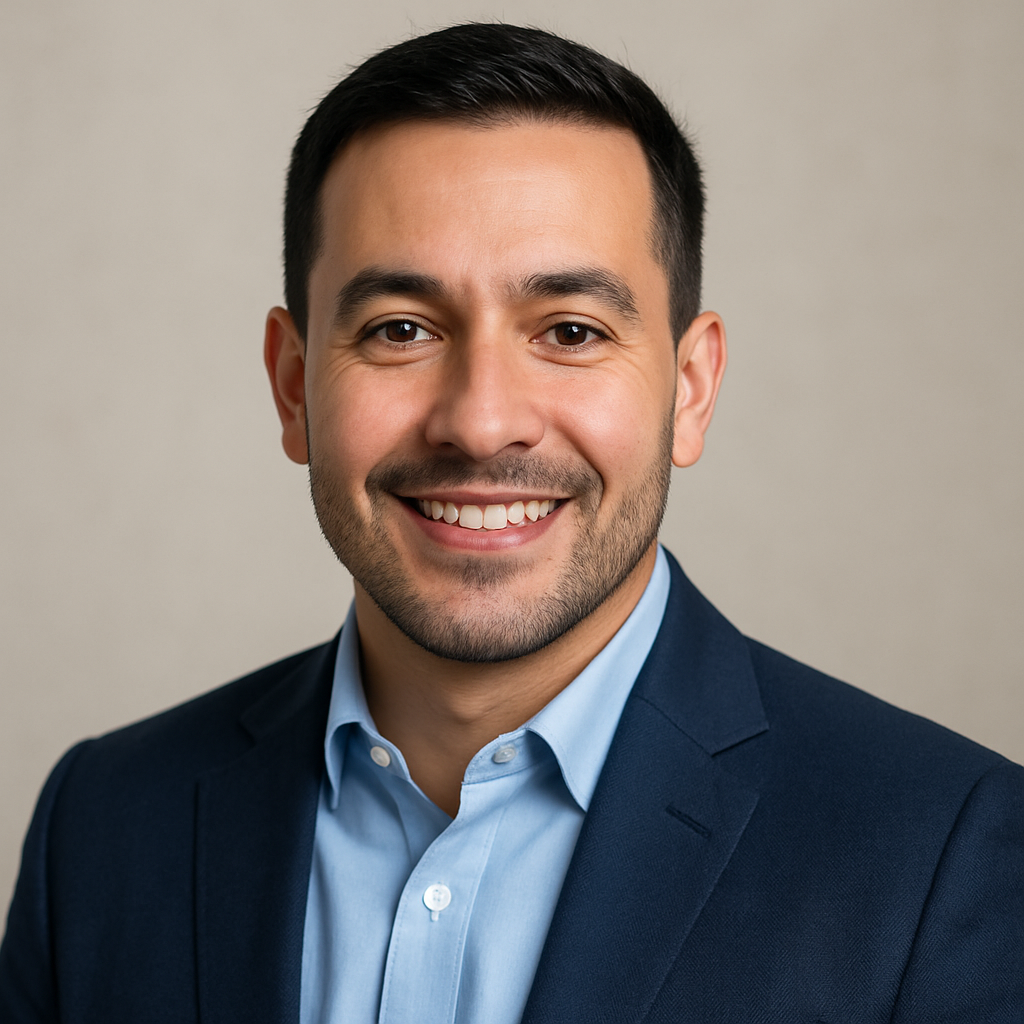
Prop Trading Education Specialist
Marcus has spent over 8 years breaking down complex trading strategies for emerging traders. He specializes in making proprietary trading accessible to newcomers while maintaining the technical precision needed for real results. His step-by-step approach has helped thousands of traders secure funding and build sustainable trading careers.

