Last updated
Backtesting is the process of testing a trading strategy on historical market data to see how it would have performed. You take your trading rules and apply them to past price movements — like running a simulation to check if your strategy would have made or lost money.
Think of it as a time machine for traders. Instead of risking real money on an untested idea, you can see exactly how your strategy would have played out over months or years of actual market conditions.

The math is simple: if your strategy loses money on historical data, it'll probably lose money in live trading too. But here's what most traders miss — even strategies that show profits in backtesting can fail spectacularly in real markets.
Every professional trader — from hedge fund managers to prop trading firms — uses backtesting before deploying capital. Platforms like QuantConnect handle millions of backtests daily for traders worldwide.
Sign up and choose your ideal pro sign up to FundedX now p account.
Backtesting works by feeding your trading algorithm historical price data and letting it make the same decisions it would in live markets. The system calculates when your algorithm would have bought, sold, and closed positions — then measures the results.
Here's the step-by-step process most platforms use:
First, you define your trading rules. Maybe your algorithm buys when the 20-day moving average crosses above the 50-day average. Or it sells when RSI hits 70. These rules need to be specific enough for a computer to execute without human interpretation.
Next, the backtesting engine feeds your algorithm historical price data — tick by tick, minute by minute, or day by day depending on your strategy's timeframe. Your algorithm processes each data point and decides whether to enter, exit, or hold positions.
The system tracks every hypothetical trade: entry price, exit price, position size, holding period, and profit or loss. It also accounts for trading costs like spreads, commissions, and slippage to give you realistic results.
| Backtesting Component | What It Does | Why It Matters |
|---|---|---|
| Historical Data Feed | Provides past price movements | Strategy needs real market conditions |
| Trading Logic Engine | Executes buy/sell decisions | Must match live trading behavior |
| Performance Calculator | Measures profits, losses, metrics | Shows if strategy actually works |
| Cost Simulator | Adds spreads, commissions, slippage | Prevents unrealistic profit estimates |
Finally, you get a performance report showing total return, win rate, maximum drawdown, Sharpe ratio, and dozens of other metrics. This data tells you whether your strategy is worth trading with real money.
Most traders rush through backtesting and wonder why their live results don't match their simulations. The difference between profitable backtesting and losing real money comes down to following a systematic process.
Start with clean, high-quality data. Bad data produces misleading results that can cost you thousands when you go live. Your data needs to include bid-ask spreads, not just closing prices. It needs to account for stock splits, dividend adjustments, and corporate actions.
Define your strategy rules with mathematical precision. Vague rules like "buy when momentum is strong" won't work in backtesting. You need specific conditions: "buy when 14-day RSI crosses above 30 AND price is above 20-day moving average."
Here's the testing sequence that separates amateur from professional backtesting:
Step 1: Run your initial backtest on 70% of your historical data. This is your training period where you develop and refine your strategy.
Step 2: Test the strategy on the remaining 30% of data — the out-of-sample period. If performance drops significantly, your strategy was probably curve-fitted to the training data.
Step 3: Walk-forward testing. This divides your data into rolling periods and retests your strategy on each segment. Real markets change, so your strategy needs to work across different market conditions.

Include realistic transaction costs in every backtest. A strategy that makes $500 per trade looks great until you subtract $50 in commissions and slippage. Many high-frequency strategies that appear profitable in simulation lose money once you add real trading costs.
Test across multiple market conditions. Your strategy might work great during trending markets but fail during sideways periods. helps you run these comprehensive tests across various market scenarios.
The biggest backtesting mistake is survivorship bias — only testing strategies on stocks or assets that survived the entire testing period. This skips all the companies that went bankrupt or were delisted, making your results unrealistically optimistic.
Look-ahead bias is even more dangerous. This happens when your strategy uses information that wouldn't have been available at the time of the trade. For example, using end-of-day closing prices to make "morning" trading decisions.
Position sizing errors destroy otherwise solid strategies. Many traders backtest with fixed position sizes but then use percentage-based sizing in live trading. Or they test with $10,000 positions but trade with $50,000 — completely changing their risk profile.
According to industry analysis, typical estimates suggest that 68% of failed algorithmic strategies suffer from overfitting — they're designed to work perfectly on historical data but fail in new market conditions.
Data snooping is subtle but deadly. This happens when you test dozens of strategy variations and only report the best results. Each test increases the chance of finding a profitable pattern by pure luck. Experienced algo traders know that strategies showing exceptional backtest performance often disappoint in live markets.
Unrealistic execution assumptions can make any strategy look profitable. If your backtest assumes you can always buy at the exact opening price or sell at the precise closing price, you're setting yourself up for disappointment. Real trading involves slippage, partial fills, and timing delays.
QuantConnect leads the institutional-grade backtesting space with cloud-based infrastructure that handles massive datasets. Their platform supports multiple programming languages and provides high-quality data going back decades.
For retail traders, tradingView offers browser-based backtesting through Pine Script. It's not as sophisticated as institutional platforms, but it's accessible and integrates well with most brokers. The downside? Limited customization and slower execution testing.
Python-based solutions like Backtrader and Zipline give you complete control over your testing process. You can customize every aspect of the simulation, from commission structures to position sizing algorithms. The tradeoff is complexity — you need programming skills to use these tools effectively.
| Platform | Best For | Key Advantage | Main Limitation |
|---|---|---|---|
| QuantConnect | Professional strategies | Institutional-grade data and infrastructure | Learning curve for beginners |
| TradingView | Simple strategies | User-friendly interface | Limited customization options |
| Backtrader (Python) | Custom requirements | Complete flexibility | Requires programming knowledge |
| MetaTrader | Forex strategies | Built-in broker integration | Limited to forex and CFDs |
MetaTrader 5 remains popular for forex backtesting, especially among prop traders. It handles Expert Advisors well and provides realistic spread modeling. However, the data quality varies significantly between brokers.

Professional quantitative firms often build custom backtesting engines using C++ or Java for speed. These systems can process millions of trades per second, essential for high-frequency strategies.
Total return grabs attention, but it's not the most important metric. A strategy returning 50% annually might be worthless if it loses 40% in a single month. Professional traders focus on risk-adjusted returns first.
Maximum drawdown tells you the worst-case scenario — how much you'd lose during the strategy's biggest losing streak. If your backtesting shows a 15% maximum drawdown, expect 20-25% drawdowns in live trading. Markets are always more volatile than historical data suggests.
The Sharpe ratio measures return per unit of risk. Anything above 1.0 is decent, above 2.0 is excellent, and above 3.0 is probably too good to be true. Strategies with Sharpe ratios above 4.0 usually suffer from data issues or unrealistic assumptions.
Win rate seems important but can be misleading. A strategy with a 30% win rate can be highly profitable if the average winner is much larger than the average loser. Conversely, a 90% win rate strategy can lose money if the few losers wipe out many small gains.
Profit factor — total gains divided by total losses — gives you a quick profitability check. Anything below 1.3 is marginal for live trading once you add real-world costs. Above 2.0 is strong, above 3.0 might indicate curve-fitting.
Look at trade frequency and holding periods. Strategies requiring hundreds of trades per day face execution challenges that backtesting can't capture. High-frequency strategies often work in simulation but fail due to latency, partial fills, and competition from faster traders.
Monte Carlo simulation addresses one of backtesting's biggest weaknesses — the assumption that trades will occur in the same sequence as historical markets. By randomly shuffling trade order thousands of times, you can see the range of possible outcomes.
Portfolio-level backtesting reveals correlations between strategies that individual backtests miss. A strategy that works well on Apple might fail when combined with a similar strategy on Microsoft because both stocks often move together.
Walk-forward optimization continuously retunes your strategy parameters as market conditions change. Instead of using fixed settings for the entire backtest period, this approach adapts to evolving market dynamics — much like live trading requires.
Stress testing exposes your strategy to extreme market conditions that might not appear in normal historical data. What happens during flash crashes? How does your strategy perform during overnight gaps? These scenarios can destroy unprepared algorithms.
Multi-timeframe backtesting ensures your strategy works across different trading frequencies. A daily strategy might look great but fail when you need to execute trades intraday due to market impact and timing issues.
Advanced practitioners also use cross-asset backtesting to find strategies that work across multiple markets. This diversification often produces more stable returns than single-asset approaches.
Paper trading is your bridge between backtesting and live trading. Run your strategy in real-time market conditions without risking capital. This reveals execution issues, data discrepancies, and timing problems that backtesting can't capture.
Start with smaller position sizes than your backtest assumed. If you tested with $10,000 positions, begin live trading with $2,000 positions. This reduces risk while you validate that your live results match backtesting expectations.
Monitor key metrics daily during your first 30 live trades. Track slippage, fill rates, and execution timing. If your actual transaction costs exceed backtesting assumptions by more than 50%, reduce position sizes or modify your strategy.
Build kill switches into your live trading system. Set maximum daily loss limits, position size limits, and correlation limits that automatically stop trading if something goes wrong. Risk management systems prevent single trades from destroying months of profits.
Keep detailed records of every live trade and compare them to backtesting expectations. Successful algorithmic traders maintain spreadsheets tracking execution quality, market impact, and performance attribution for continuous improvement.
Don't abandon strategies too quickly if live results differ from backtesting. Give your algorithm at least 50-100 trades to establish a meaningful track record. Market conditions constantly change, and short-term underperformance doesn't necessarily indicate strategy failure.
You need at least 2-3 years of high-quality historical data for most strategies. Short-term strategies require more data points — aim for at least 1,000 individual trades in your backtest. Longer-term strategies can work with less calendar time but still need enough market cycles to validate performance across different conditions.
Be skeptical of backtest results showing annual returns above 100%. These often indicate curve-fitting, data errors, or unrealistic assumptions. Professional traders typically target 15-40% annual returns with proper risk management. Strategies showing 200%+ returns in backtesting usually fail in live markets.
Backtesting uses historical data to simulate how your strategy would have performed in the past. Paper trading runs your strategy in real-time current markets without using real money. Both are essential — backtesting validates your concept, paper trading confirms execution feasibility.
Include realistic transaction costs: spreads, commissions, and slippage. For larger positions, add market impact costs — your trades will move prices against you. A good rule: add 0.1-0.3% transaction costs for liquid stocks, 0.5-1.0% for less liquid assets. Test with position sizes appropriate for your actual trading capital.
No. Backtesting shows how a strategy would have performed in past market conditions, but markets constantly evolve. Use backtesting to eliminate obviously flawed strategies, not to predict future returns. Always combine backtesting with paper trading and start with smaller position sizes when going live.
Focus on maximum drawdown, Sharpe ratio, and profit factor first. Maximum drawdown shows your worst-case losses. Sharpe ratio measures risk-adjusted returns. Profit factor (total gains ÷ total losses) indicates overall profitability. Win rate and total return are less important than these risk-adjusted metrics.
Sign up and choose your ideal pro sign up to FundedX now p account.
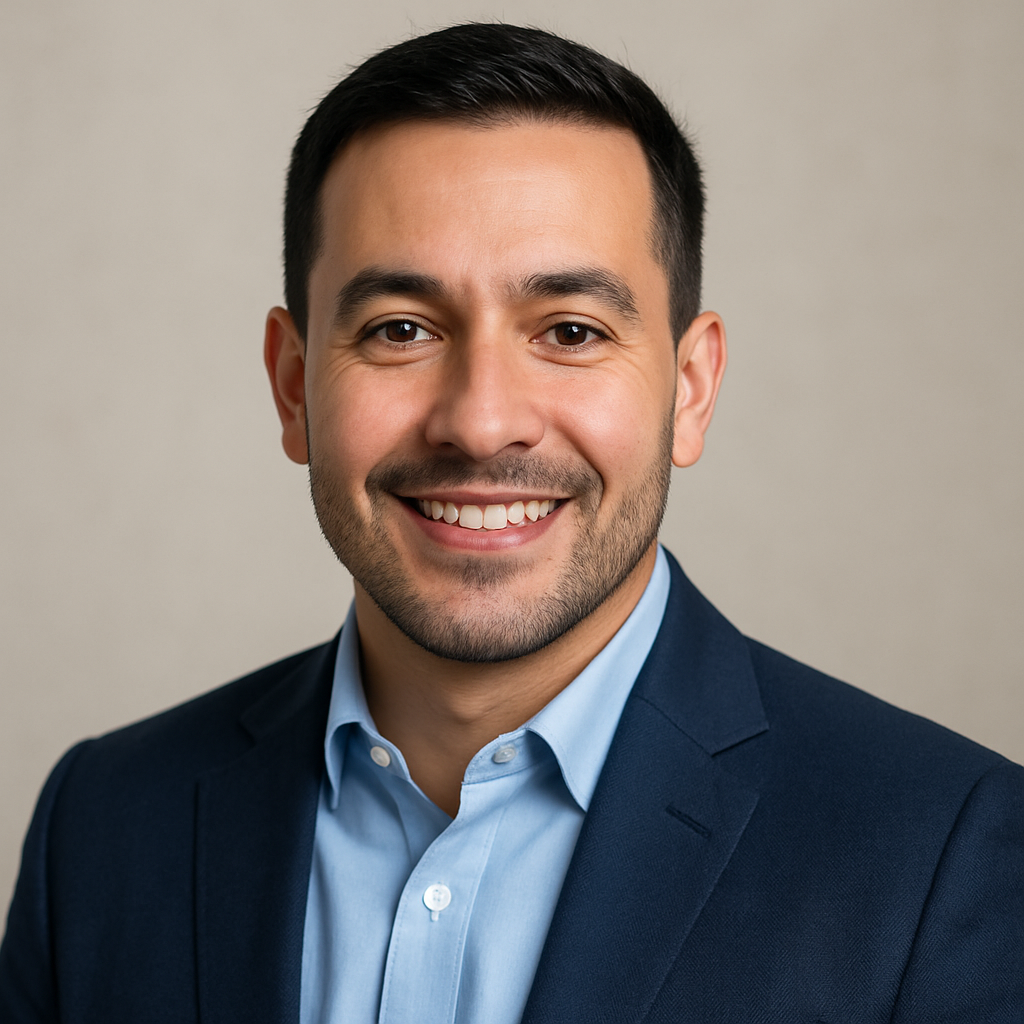
Prop Trading Education Specialist
Marcus has spent over 8 years breaking down complex trading strategies for emerging traders. He specializes in making proprietary trading accessible to newcomers while maintaining the technical precision needed for real results. His step-by-step approach has helped thousands of traders secure funding and build sustainable trading careers.

